It’s been a tough year in the candy industry. In the last several weeks alone, two major retailers, Lammes Candies and the Oprah-approved Kate Weiser Chocolate, revealed that they would be closing their doors for good.
And earlier this year, Jelly Belly announced it would close its commercial-corporate offices, laying off hundreds of employees.
Between elevated prices on ingredients such as cocoa, changing consumer preferences, and inflation, the industry has been battered by a multitude of factors that have stymied its growth.
But the confectionary sector isn’t waiving the white flag just yet. In 2025, confectionary sales hit $55 billion in the U.S., according to the National Confectioner’s Association’s State of Treating report. By 2030, it’s expected that sales across all confectionery categories in the country will rise another $7.3 billion to $62.2 billion.
“Americans today are making their purchase decisions with greater intention, and chocolate and candy continue to earn their place in the basket,” National Confectioner’s Association CEO John Downs said in a statement accompanying the report.
“The confectionery industry consistently delivers products that consumers know and love while introducing new innovations that shape how people choose to enjoy and share treats,” he continued. “No matter the occasion, confectionery brings people together.”
It’s in that spirit of innovation, comfort, and connection that Jelly Belly has unveiled its new brand identity and return to the market.
The rise and fall of Jelly Belly
The Jelly Belly Candy Company can trace its origins back to 1869, when German immigrant Gustav Goelitz opened a candy business in Belleville, Illinois. Goelitz’s first big hits were candy corn and royal buttercreams — it wasn’t until 1965 that the family business introduced its now-iconic treat.
It took another two decades for the tiny treats to really take off. In the early 1980s, then-President Ronald Reagan revealed they were his favorite snack, and retailers were suddenly struggling to keep the candies in stock.
“It’s gotten to the point where we can hardly start a meeting or make a decision without passing around a jar of jelly beans,” Reagan told People magazine in a 1981 interview.
That popularity translated into financial success, and the Jelly Belly Candy Company thrived for several decades, introducing new flavors and consistently updating its offerings.
More retail:
- Victoria’s Secret eyes Bath & Body Works turf with fragrance push
- Tyson Foods’ earnings reveal worrying food inflation trend
- Dollar General sees shift in how customers are spending
By the mid-‘00s, business was slowing, and in 2023, the Ferrara Candy Company confirmed it had completed the acquisition of the smaller brand.
“We are thrilled to welcome the Jelly Belly team and their wonderful products into the Ferrara community,” Ferrara CEO Marco Capurso said in a statement at the time. “With more than 250 years of combined history, the pairing of Ferrara and Jelly Belly brings together two iconic American companies poised to bring sweetness to even more of the world.”
Following the acquisition, Jelly Belly has undergone some major changes and restructuring. In February, Ferrara announced it would close Jelly Belly’s corporate offices and end online sales at JellyBelly.com.
However, the main factory has continued production, and Jelly Belly candies can still be found at retailers including Amazon, Walmart, and Target.
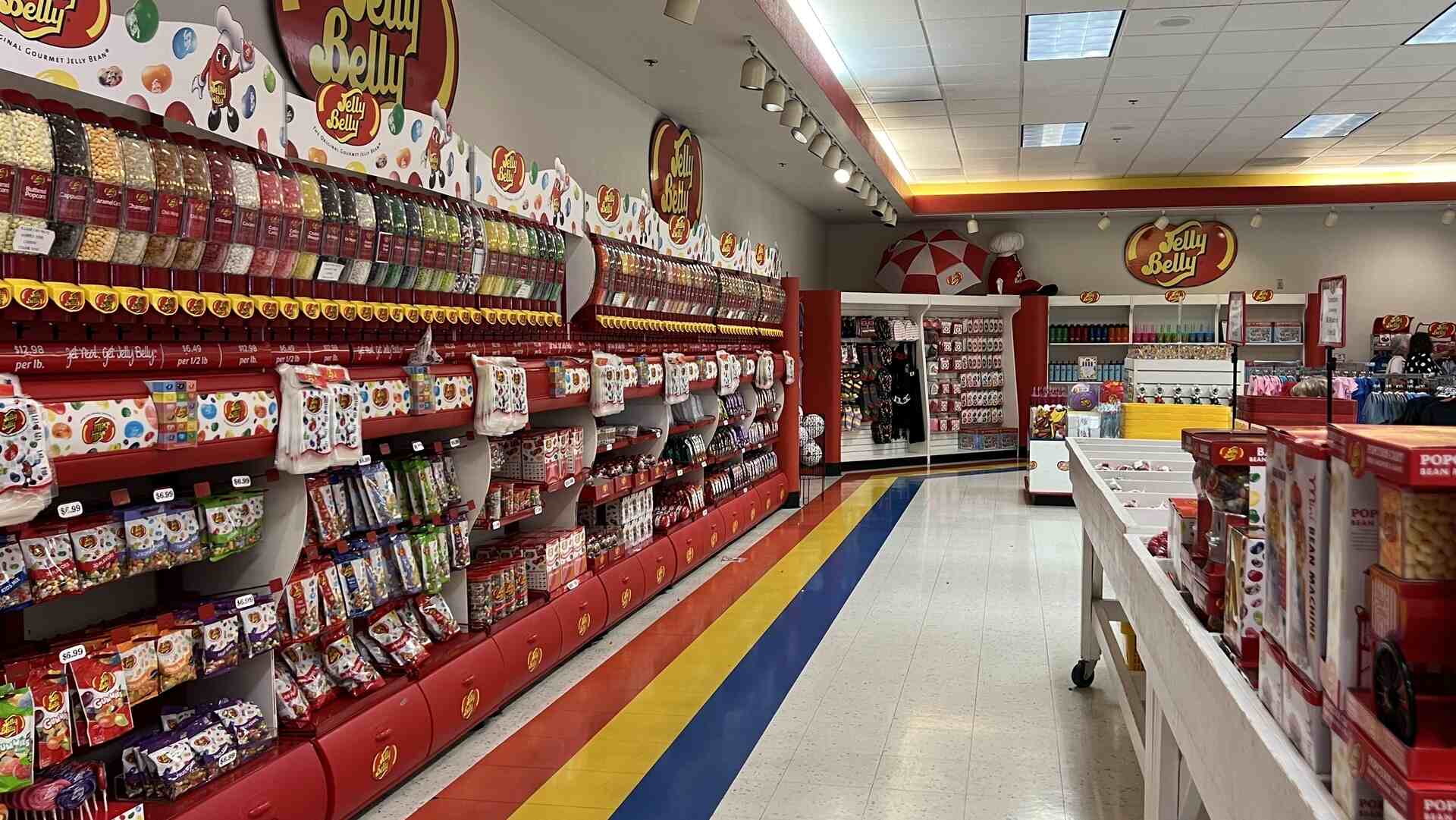
Getty Images
A new era for Jelly Belly
Jelly Belly’s corporate closure had many fans of the candy worried that Ferrara would eventually shutter the brand completely.
But a new announcement from the candy company seems to indicate that Ferrara’s plans for Jelly Belly are actually the complete opposite: Jelly Belly is getting an all-new brand identity for a new era.
“The evolution builds on Jelly Belly’s long-standing legacy of gourmet flavor innovation and the joy it brings to fans, while also introducing a more modern identity for a new generation,” Ferrara said in a statement describing Jelly Belly’s glow-up.
“At its core, it celebrates what makes the brand special: gourmet and curated true-to-life flavors, elevated indulgence and the shared experience of enjoying it with others.”
The refreshed brand launch comes with new packaging, a redesigned website, and a collection of short films that bring the iconic treat to life. Jelly Belly is also launching five new curated collections of fan-favorite flavors to celebrate its new identity.
The collections include:
- Signature 10 Collection: Very Cherry, Strawberry Jam, Tangerine, Sweet Peach, Lemon, Juicy Pear, Watermelon, Berry Blue, Wild Blackberry, and Tutti Fruitti.
- Signature 20 Collection: An expanded collection of Signature 10 flavors, plus other Jelly Belly favorites like Sizzling Cinnamon, Orange Sherbet, Pink Grapefruit, Top Banana, Blueberry, Grape Soda, Cotton Candy, Buttered Popcorn, Vanilla Bean and Toasted Marshmallow.
- Endless Summer Collection: Very Cherry, Watermelon, Cotton Candy, Orange Sherbet, Lemon Lime, and Blue Raspberry.
- Farmstand Fruit Collection: Watermelon, Strawberry Jam, Wild Blackberry, Juicy Pear, Sweet Peach, and Red Apple.
- Tropical Paradise Collection: Pink Grapefruit, Piña Colada, Watermelon, Tangerine, Lemon Lime, and Chili Mango.
Source: Ferrara Candy Company
“Our ‘Bean Appétit’ campaign marks the beginning of a new era for Jelly Belly, celebrating everything that makes the brand a cultural icon,” Lauren Pezza, Jelly Belly Global Marketing Director at Ferrara Candy Company, said in a statement.
“By leaning into our Signature flavors with thoughtfully curated collections and a refreshed new look, we’re evolving the brand to meet the preferences of younger consumers who crave ‘wow’ flavor experiences for every mood.”
With one in five younger consumers telling the NCA that they try a new confectionery item at least once a month, this rebrand is a genius way to introduce a generationally-loved candy brand to a new sector of consumer.
Related: Walmart announces unique strategy to drive sales
#major #157yearold #candy #company #returns #stage